|
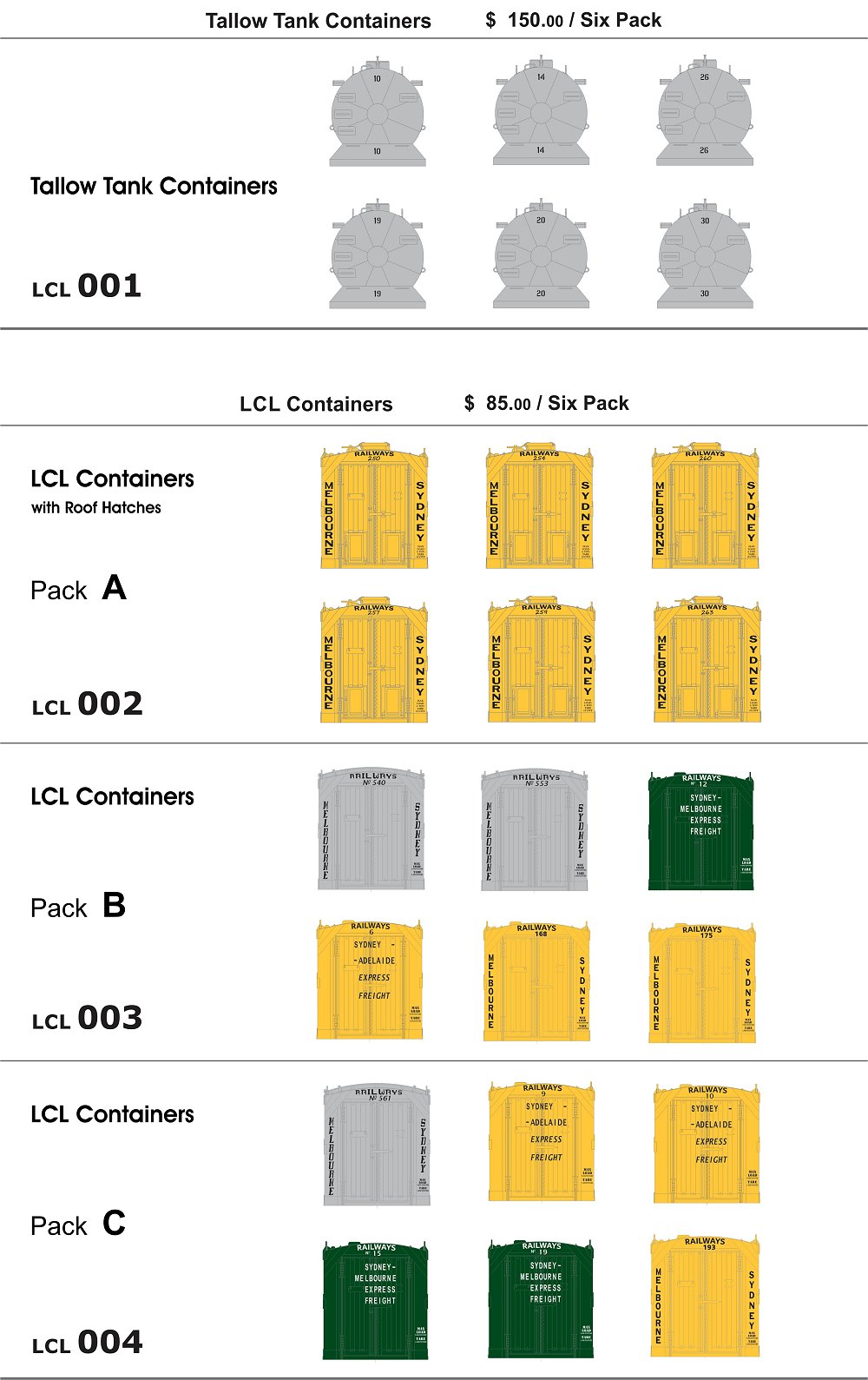
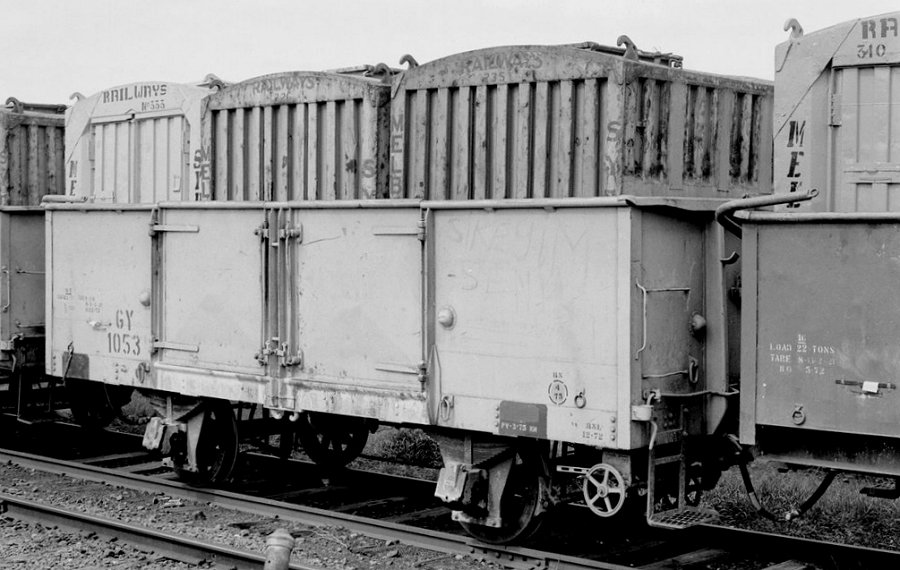
LCL (Less
than Carload) containers were an early adoption in Australia to meet the
needs of shipping small loads securely by rail and road. The South
Australian Railways commenced with timber constructed LCL containers and
later this basic design developed into the steel LCL of the late ‘50s.
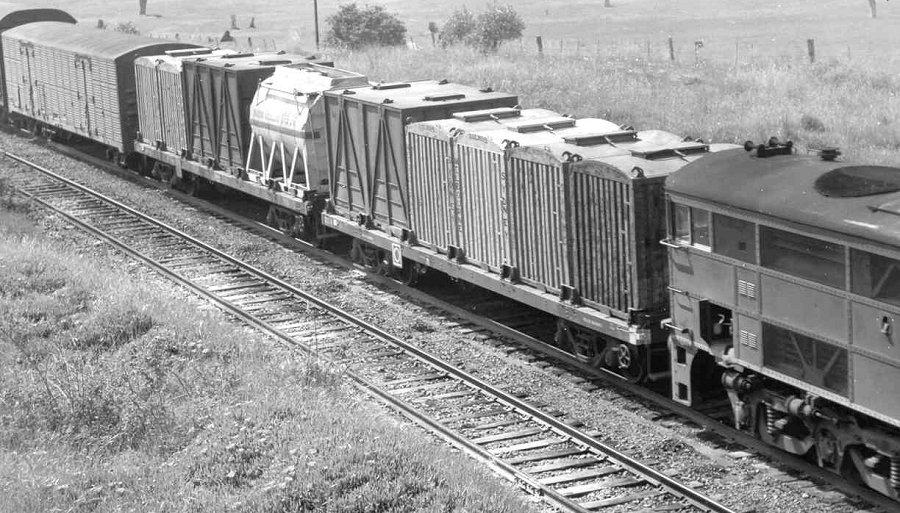
By the late ‘50s these containers were in use between Brisbane and
Adelaide. Dedicated wagons conveyed 6 or more LCLs per wagon between
capital cities. Originally, they were constructed with double hung doors
only, however later they received roof hatches and trapdoors and some
received the second shade roof.
The Tallow tank
represents the later version with insulated lagging and sheet metal
covering. These operated between several locations in and around
Melbourne and tallow was used in many different industries. Generally,
the liquid was heated via steam to increase its viscosity for
discharging.
|